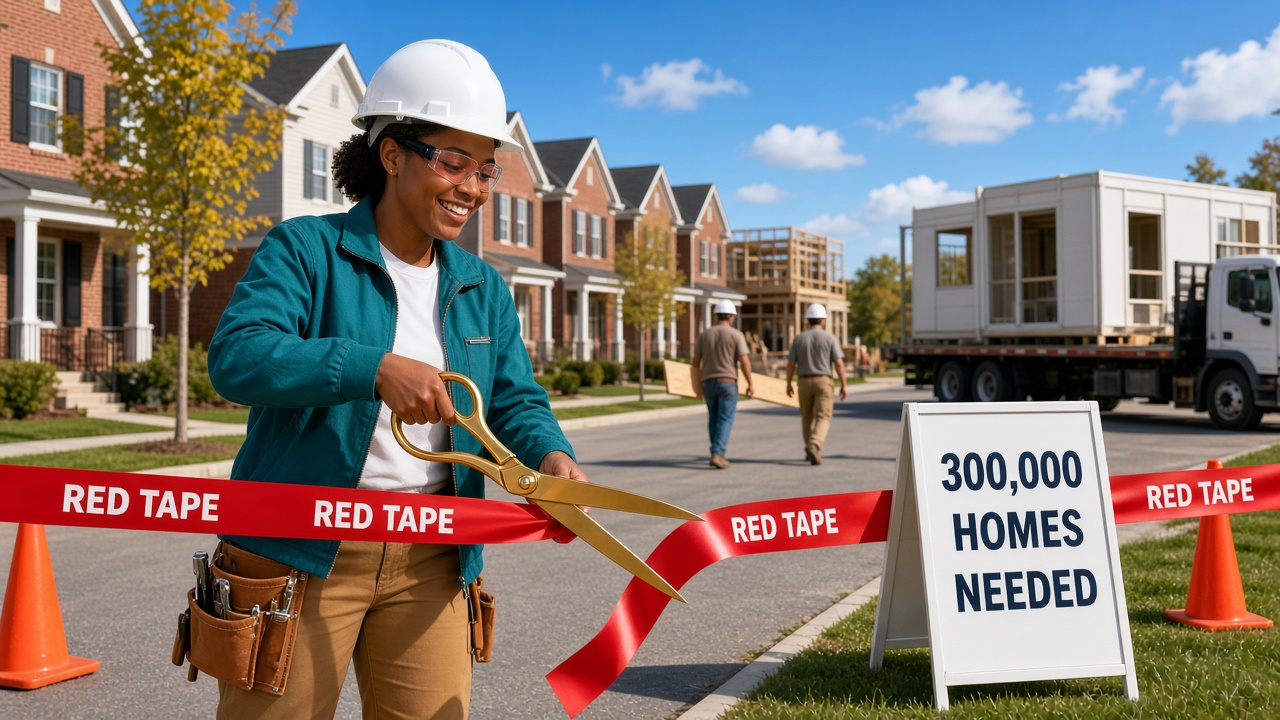

Robots Are Building Home Walls. Here's Who They're Hiring
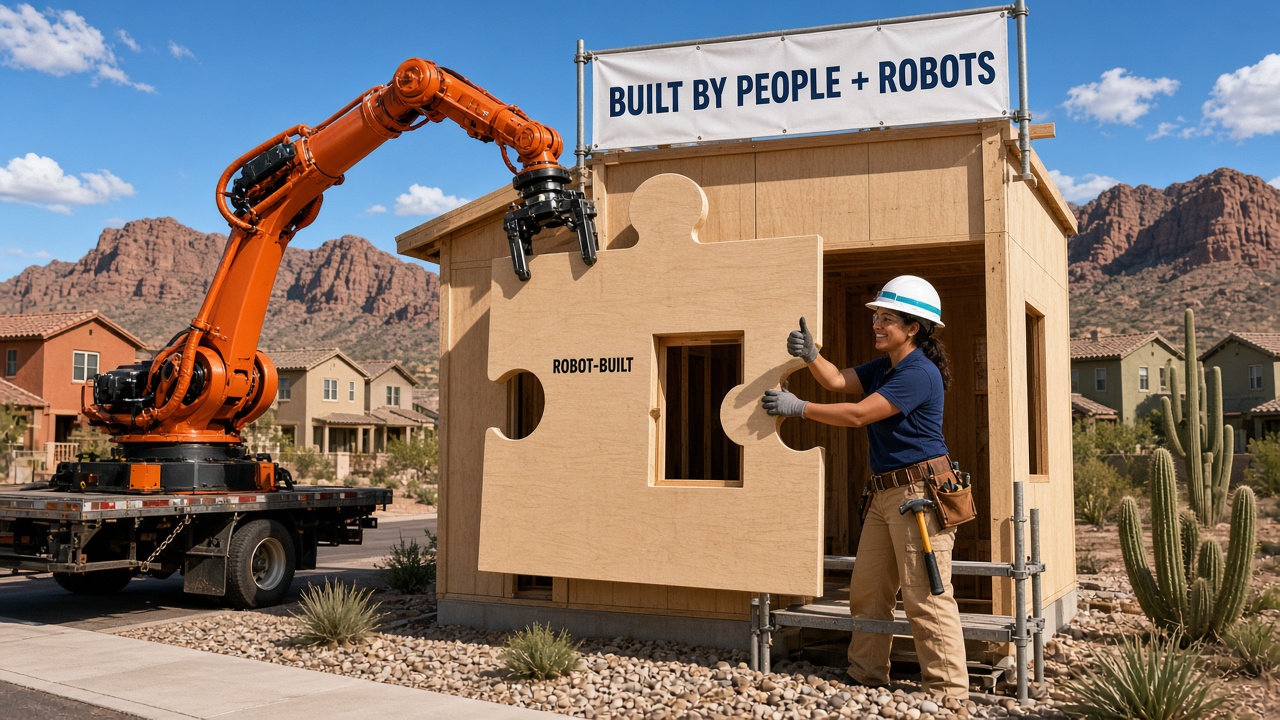
Promise Robotics just raised C$40M to build homes with robots, and it's hiring framers, carpenters and operators in Phoenix and Alberta. Here's the jobs angle.
Would you live in a home that robots helped build? A growing number of North American homebuilders are betting you will. And here's the part I love: the company leading that charge is hiring framers, carpenters and estimators, not just engineers.
This week Toronto's Promise Robotics announced a C$40 million Series B (PR Newswire, Nov. 17, 2026), led by White Star Capital with Horizons Ventures, Radical Ventures and Canadian pension fund PSP Investments. On Nov. 20, The Globe and Mail's weekly real estate roundup led with it. The money is going into more robot factories, and the first one in the US is coming to Phoenix.
If you work in residential construction, or want to, this is worth five minutes of your time.
What Promise actually does
Promise isn't a modular-home company shipping finished boxes down the highway. Its AI software takes a builder's existing house plans and breaks them into wall, floor and ceiling-sized components. Robots in a factory then build those pieces, and the Globe says that can go right down to the HVAC and plumbing systems. The components are trucked to site, where crews hired by Promise assemble them into finished homes.
The company calls it "Factory-as-a-Service." Builders pay for the output instead of building and running their own plants. According to The Next Web (Nov. 17, 2026), Promise has:
- Live factories in Calgary and Nisku, Alberta
- More than 2,500 homes under contract across three markets
- A multi-year deal signed last month with D.R. Horton, America's largest homebuilder by volume, covering more than 1,250 homes
- Its first US plant in Phoenix, due to open in 2027
The Globe reports it has built about 200 homes so far, and BetaKit, citing the Globe, says the plan is to grow the team from 85 to more than 100 people.
CEO and co-founder Ramtin Attar put the pitch plainly in the press release: "Homebuilding can't scale on trade labor alone, and builders shouldn't have to become manufacturers to grow."
Why builders are listening
Builders need more capacity and can't find enough skilled people to deliver it. We've covered that squeeze a lot on this site, from the 3 million construction workers who could retire by 2031 to builder confidence at a 14-year low.
Canada's latest numbers show why productivity matters so much. Statistics Canada reported on Nov. 19 that investment in building construction edged down 0.2% to $23.4 billion in September. Residential fell 0.8%, led by a 3.4% drop in single-family homes, while multi-unit rose 1.5%. Year over year, total building investment is still up 7.8%. So the money hasn't gone away, but builders are under pressure to do more with the same crews. Factory-built components are one answer to that.
So, will robots take construction jobs?
My honest take: not the way the headlines might suggest. They'll change where some of the work happens and what the best-paid people do.
The Globe's tech reporter Murad Hemmadi made a great point in the roundup: "The trades are harder to automate, because most robots that aren't fixed to a manufacturing line don't have fine motor control skills." Robots are brilliant at repeating precise cuts and nail patterns on a factory line. They're nowhere near ready to handle a muddy lot, a crooked foundation or a last-minute change from the site super.
What you get is a hybrid. Repetitive framing moves indoors, out of the heat and rain, and onto a steady weekday shift. Skilled people still install, finish, inspect and fix things on site. And new roles open up in between.
Who Promise is hiring right now
I checked Promise's careers board on Nov. 20, 2026. It listed 21 openings, and plenty of them are trades and construction roles:
- Lead Site Framer, Phoenix (posted Nov. 13): five-plus years of residential framing, team leadership and a solid grasp of Arizona residential building codes.
- Robotics Operator, Phoenix: runs and monitors the robotic production line. The ad says manufacturing or construction equipment experience counts, and robotics exposure is "a benefit but not necessary." The standard shift is 7 a.m. to 5:30 p.m., Monday to Thursday.
- Production Manager, Phoenix: runs the whole factory, from production and quality to the P&L.
- Journeyman Carpenter, Edmonton: framing panels, floors, stairs and roofs. The posting says the role can lead to training as a robotic machine operator.
- Production Framer and Site Framer roles in Calgary and Edmonton, plus estimators, robotics engineers and software developers.
For pay context, the US Bureau of Labor Statistics puts the median carpenter wage at $60,580 (May 2025), with about 62,800 openings a year projected over the decade. A framer who can also run a robot cell has a genuinely rare combination of skills, and rare skills get paid.
What this means for your career
If you're a framer or carpenter: your know-how is the thing robots can't copy. Learn to read shop drawings and digital plans fluently, and put your hand up when a robotic or panelized line comes to town. Many factory roles offer predictable hours and less weather exposure.
If you're new to construction: factory-built housing is a great on-ramp. Machine operator and production roles often value mechanical aptitude and reliability over years of site experience.
If you're in estimating or project management: panelized building changes how jobs are priced and scheduled. Estimators who understand both stick-built and factory workflows will be in demand. Our guides to the cost estimator and construction superintendent roles are a good place to start.
For everyone: get comfortable with tech. AI tools such as Grok Bot, ChatGPT or Claude can help you get up to speed on plans, codes and new processes faster than ever. Just double-check anything that matters.
I'm genuinely excited by this. We need millions more homes across the USA and Canada, and it's clear we won't build them with the old methods and a shrinking workforce. Pairing smart machines with skilled people is how we close the gap, and it's creating new kinds of property careers along the way.
Ready to be part of the next generation of homebuilding? Browse construction and property jobs on PropertyRoles and find your next role.