
3 Million Construction Workers Could Leave by 2031: Your Opening
A new survey says over 3 million US construction workers could retire or quit by 2031, just as housing starts jumped 9.9%. Here's where the jobs are.
Two pieces of construction news landed this week, a day apart, and together they tell you more about where property careers are heading than any single headline.
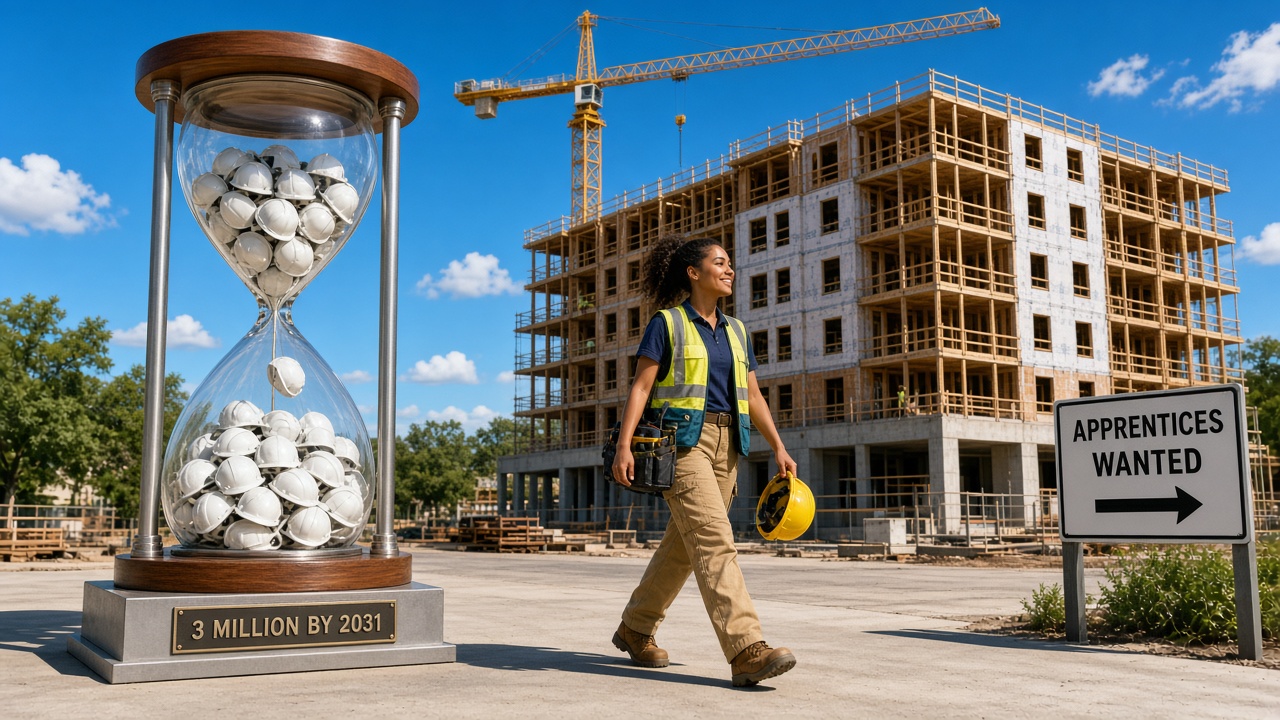
On Monday, November 17, a survey of 1,000 senior leaders at US and UK architecture, engineering and construction firms estimated that more than 3 million US construction workers could retire or leave the industry by 2031 (Construction Briefing, Nov. 17, 2026).
On Wednesday, November 18, the Census Bureau and HUD reported that US housing starts jumped 9.9% in October to a seasonally adjusted annual rate of 1.309 million homes (US Census Bureau, Nov. 18, 2026).
One story is about the people walking out the door. The other is about the work that still needs doing. If you're thinking about a career in construction or property, the gap between the two is where your opportunity sits.
The retirement wave, in numbers
The research came from Revizto, a construction collaboration software company, so read it with that in mind: they sell tools that help firms capture knowledge, and the headline figure is an extrapolation. Leaders were asked how much of their workforce they expect to lose, and those expectations were applied to each country's construction workforce. It's a projection, not a count.
Even so, the detail is striking:
- Leaders expected more than a third of their workforce to retire or leave within five years.
- 55% expected to lose more than 30% of their staff, and nearly one in five expected to lose more than 60%.
- Only 27% of firms had a documented process to capture departing workers' expertise, and half said their handover and mentoring arrangements wouldn't do the job.
The bit that jumped out at me was from a second Revizto survey of 1,000 people aged 18 to 24 in the US and UK. 87% were interested in a career with paid training and apprenticeships. Only 5% said they were pursuing, or would pursue, a career in construction.
That's not a demand problem. That's a marketing problem. Young people want exactly what construction offers (getting paid to learn, a clear ladder, real skills) and most of them simply aren't connecting the two.
Canada is staring at the same cliff. BuildForce Canada's 2026 to 2035 outlook projects that 135,000 residential construction workers will retire by 2035, more than a fifth of that sector's current labor force (BuildForce Canada, July 20, 2026).
And the work? It's lumpy, but it's there
October's starts rebound came mostly from apartments. Starts in buildings with five or more units hit 433,000, up 25.5% from September, while single-family starts rose 4% to 864,000 (Multifamily Dive, Nov. 18, 2026). The South led the way at 747,000 starts, and the Midwest jumped 48.4% month over month. The Northeast and West fell.
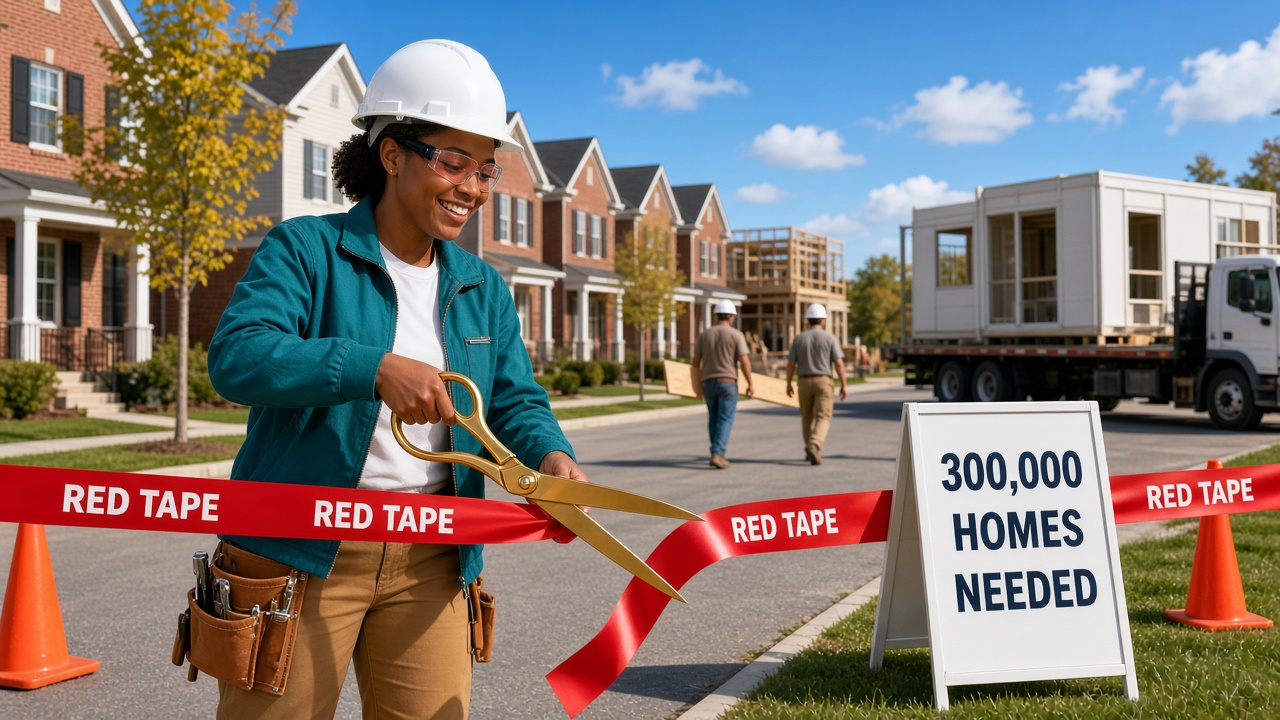
I'm not going to pretend this is a boom. Building permits, which signal what gets built next, fell 7.4% to 1.295 million, the lowest since May 2020, according to Axios (Nov. 18, 2026). Builder confidence is at its weakest since 2012. The National Association of Home Builders called the gain "encouraging" but said it "does not necessarily signal a sustained recovery" (NAHB, Nov. 18, 2026). Input prices are up 11.5% year over year, per the Associated Builders and Contractors.
But look at what's already in the ground. NAHB counts 581,000 single-family homes and 691,000 apartments under construction right now. Every one of those needs framers, electricians, plumbers, superintendents, inspectors and, before long, leasing teams and maintenance techs. NAHB's chairman also said stepped-up immigration enforcement is "keeping legal workers off job sites, deepening labor shortages and driving up costs." Add a retirement wave on top of that, and the labor math gets tight even in a soft market.
What this means for your career
Here's my honest read. A soft quarter for permits doesn't cancel a decade-long people shortage. Cycles come and go in 18 months. Retirements don't reverse.
If you're starting out, this is a great moment to get into the trades or site roles. Firms that are about to lose a third of their crews will be very motivated to train the people who show up. Look for registered apprenticeships and pre-apprenticeship programs, and lean toward multifamily, nonresidential and the South and Midwest, where activity is strongest right now.
If you're mid-career, your experience just got more valuable. Firms are worried about knowledge walking out the door. Being the person who can mentor, document and train the next crew is a genuine career move, not a side job. Superintendent, assistant project manager and safety roles all reward that.
If you're tech-minded, there's a growing lane for people who sit between the field and the software. Firms are turning to project-model platforms, digital twins and AI assistants to capture what their veterans know: why that detail was changed, which supplier runs late, what the inspector always checks. Someone has to set that up and make it useful on site. A Forbes Technology Council piece this week made the same point: AI can surface the patterns an experienced builder carries in their head, but people still make the final call (Forbes, Nov. 18, 2026).
If you're an employer, don't wait for your best superintendent's retirement party to start the handover. Pair juniors with veterans on live jobs, record the decisions in the tools your teams already use, and make your training offer loud. That 87% of young people want paid training. Tell them you offer it.
The bottom line
Construction is heading into 2027 with fewer experienced hands, a shaky permit pipeline and more than 1.2 million homes already under construction. That's a mixed picture for builders. For anyone willing to learn, it's mostly good news. The people who step in now will be the superintendents, estimators and project leads of the 2030s, and they'll be hard to replace.
I'm genuinely optimistic about this. The work is real, the training routes are better than ever, and the tech makes it easier to learn from the best before they hang up the tool belt.
Ready to make your move? Browse the latest construction and property roles across the USA and Canada on our jobs board.