

What Does a Home Inspector Do? (US & Canada Career Guide)
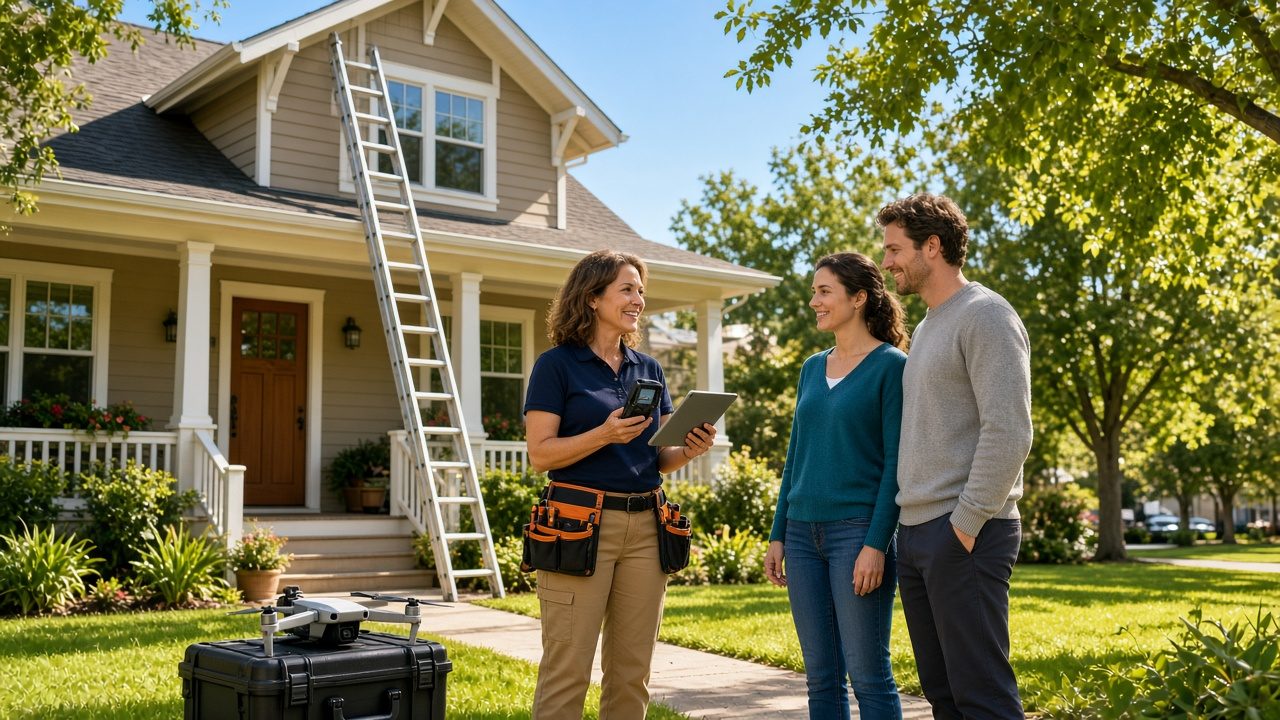
Home inspectors tell buyers the truth about a house. Day-to-day work, skills, state and provincial licensing, pay and how to start in the US and Canada.
Buying a home is the biggest purchase most people will ever make, and for a few hours before they commit, one person has the job of telling them the truth about it. That person is the home inspector.
It's one of the most practical, independent and quietly satisfying careers in residential property. You're out in the field solving puzzles, and you're the one buyers trust when the sales talk stops. If you've got a trade background or you simply love knowing how buildings work, it's well worth a look.
What a home inspector actually does
A home inspector carries out a visual, non-invasive assessment of a house, condo or townhome, usually after a buyer's offer is accepted and before the inspection contingency expires.
The Bureau of Labor Statistics describes the job well. Inspectors examine the roof, foundation, interior and exterior walls, and the plumbing, electrical and HVAC systems. They may identify building code violations but, unlike municipal building inspectors, they have no power to enforce compliance. Their job is to report, not to police.
A typical day might look like this:
- Morning inspection, about two to four hours: roof and gutters, attic insulation and ventilation, crawlspace or basement, electrical panel, water heater, furnace and AC, windows, doors, appliances, grading and drainage.
- Tools in the bag: flashlight, moisture meter, outlet tester, infrared camera, ladder and often a drone for roofs you can't safely walk.
- Walking the buyer through it: explaining what's a real problem and what's ordinary wear.
- Afternoon add-ons: radon testing, sewer scope, mold sampling, wind mitigation (big in Florida) or a four-point insurance inspection.
- Evening: writing the report. BLS notes that home inspectors often inspect during the day and write reports at night.
The best description I've seen came from a Michigan agent quoted by Realtor.com in August 2026: "We're on a bear hunt, we're not worried about the chipmunks and squirrels." Good inspectors find the bears and explain the chipmunks calmly.
Skills that matter
- Building systems knowledge. Many inspectors come from carpentry, electrical, plumbing, HVAC or general contracting, and that background shows.
- Plain-English communication. A nervous first-time buyer needs "this panel is a known fire risk, get an electrician to quote replacement," not jargon.
- Attention to detail and stamina. You'll climb ladders, crawl through attics in July and squeeze into crawlspaces.
- Report writing and tech. Modern inspection software, photo-rich reports, thermal imaging and drones are standard now. AI tools such as Grok Bot, Claude or ChatGPT can help tidy report language or draft client summaries, but the findings must come from what you saw and verified yourself.
- Business sense. Many inspectors are self-employed, so scheduling, marketing and agent relationships matter.
Licensing: it depends where you work
There's no national license. According to the American Society of Home Inspectors (ASHI), as reported by Realtor.com, 12 states don't regulate home inspectors at all, and 35 clearly require a conventional state license or registration. Among regulated states, 37 of 38 require an exam, most often the National Home Inspector Examination, and only 25 require supervised inspections or other field experience.
A few examples:
- Florida: 120 hours of approved pre-licensing education, pass the National Home Inspector Exam, then renew every two years with 14 hours of continuing education, including two on wind mitigation (Realtor.com).
- Texas: one of the most regulated states. The Texas Real Estate Commission uses a tiered path from apprentice to real estate inspector to professional inspector, with education, a state exam and supervised field work.
- Unregulated states such as Minnesota and Michigan: you can legally start without a state license. That makes voluntary credentials from ASHI or InterNACHI, plus insurance, even more important for winning trust.
In Canada, licensing is provincial. British Columbia requires a licence through Consumer Protection BC, including approved education, an exam, supervised inspection hours, a criminal record check and insurance. Alberta also requires a licence, with proof of education, a criminal record check and an associated licensed home inspection business. Ontario passed the Home Inspection Act, 2017, but as of late 2026 it still hadn't been proclaimed into force, so there's no mandatory provincial licence there yet. Many Ontario inspectors hold voluntary credentials instead, such as the Registered Home Inspector (RHI) designation from the Ontario Association of Home Inspectors.
Always confirm current rules with your state board or provincial regulator before paying for a course.
What it pays
BLS groups home inspectors with construction and building inspectors. For that wider group, the median annual wage was $74,690 in May 2025. The lowest 10% earned under $47,140 and the top 10% earned over $114,200. BLS projects about 14,800 openings a year through 2035, mostly to replace people who retire or move on.
One caveat: BLS wage data excludes the self-employed, and many home inspectors run their own businesses. Their income depends on volume and add-ons. Angi's 2026 data puts the national average home inspection at about $344, based on more than 34,000 projects, with most buyers paying roughly $296–$425. Do the math on two inspections a day plus radon, sewer scope and insurance inspections, and a well-run solo or multi-inspector business can earn well. You also carry the costs: insurance, software, marketing, vehicle and equipment.
Career path
- Trainee or associate inspector at a multi-inspector firm, learning on supervised jobs.
- Licensed independent inspector, often building referral relationships with agents.
- Specialist: commercial property condition assessments, new-construction phase inspections, energy audits, or mold and radon.
- Business owner running a multi-inspector company.
- Adjacent moves: municipal building inspector, plans examiner, insurance inspector, or construction quality roles.
How to start
- Check your state or province's rules first. Hours, exams, field work and insurance vary a lot.
- Take approved pre-licensing training and sit the required exam.
- Get field experience. Ride along with a seasoned inspector, even if your state doesn't require it.
- Line up E&O and general liability insurance, required in many places and essential everywhere.
- Build relationships with local agents, but always remember your duty is to the client, not the deal.
My take
Home inspection is a brilliant career for people who like independence, buildings and being genuinely useful. Tech is making the job better, not replacing it. Drones, thermal cameras and smart reporting tools mean faster, clearer reports and safer days. But nobody is automating the person in the attic with a flashlight who can tell a buyer, honestly and calmly, what they're really buying.
If that sounds like you, explore inspection, building and residential property roles across the US and Canada on our jobs board, and set up an alert so new openings reach you first.