

What Does a Land Surveyor Do? (US & Canada Career Guide)
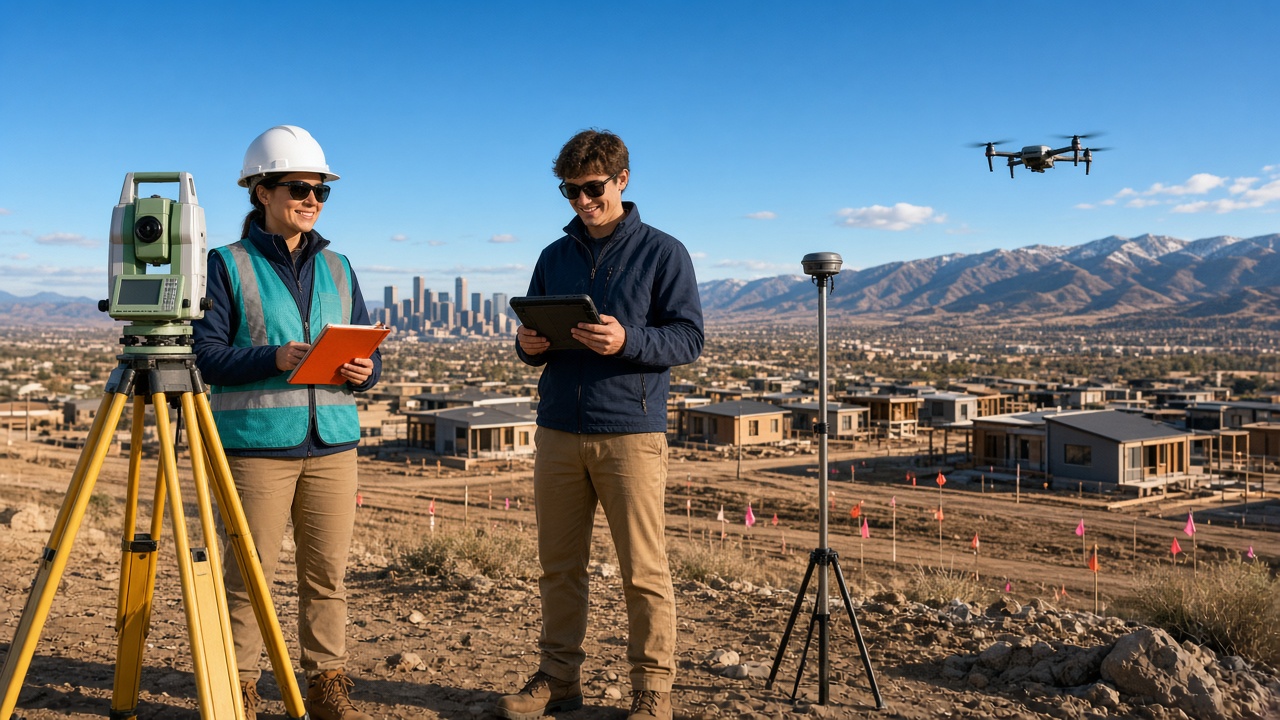
Land surveyor career guide for the US and Canada: daily work, FS and PS exams, provincial licensing, real BLS and Job Bank pay, career path and how to start.
Before a single shovel hits the dirt, before a home sells or a new subdivision gets its street names, someone has to answer a deceptively simple question: where exactly does this property begin and end? That someone is the land surveyor, and it's one of the most underrated careers in North American property.
It mixes fieldwork and tech, it's licensed and respected, and a lot of the profession is heading toward retirement. Here's what the job really involves, what it pays and how to get into it in the US and Canada.
What a land surveyor actually does
In plain English: you measure land precisely and turn those measurements into legal and technical documents people rely on. The US Bureau of Labor Statistics says surveyors "make precise measurements to determine property boundaries" and provide data on the shape and contour of the Earth's surface for engineering, mapping and construction.
A typical week might include:
- Detective work. Digging through deeds, old plats, land titles and previous surveys to work out where boundaries should be.
- Fieldwork. Getting out on site with GPS receivers and robotic total stations to find monuments and measure angles and distances.
- Staking out construction. Marking where buildings, roads and utilities go, so the builders put things in the right place.
- Drafting and analysis. Turning raw data into plats, maps and reports using CAD and GIS software.
- Solving disputes. Reconciling records that don't match what's on the ground, and sometimes testifying in court.
- Signing off. As a licensed surveyor, your seal on a document carries legal weight.
Residential vs commercial work
Residential surveyors handle boundary surveys for home sales, fence and driveway disputes, mortgage and title requirements, and lot layouts for new subdivisions. It's steady work tied to every transaction and every new community.
Commercial surveyors work on ALTA/NSPS land title surveys for commercial deals, site plans for warehouses and offices, construction layout on big projects, and infrastructure like highways, pipelines and utilities. The data center and energy boom across North America is creating plenty of this work. Every one of those massive campuses starts with a survey crew.
What it pays
- United States: The BLS reports a median annual wage of $75,440 for surveyors in May 2025. The lowest 10% earned under $46,880 and the top 10% earned more than $125,590. Pay is highest in utilities ($98,570) and government ($94,970), with construction and engineering firms around $73,000.
- Canada: Government of Canada Job Bank data for land surveyors (NOC 21203) shows a national median of C$42.20 an hour, ranging from about C$29 to C$60.51. That's roughly C$88,000 a year at the median for full-time work. Alberta stands out with a provincial median of C$48.53 an hour.
The outlook is solid. BLS projects 6% growth from 2025 to 2035, faster than the 3% average, with about 3,100 openings a year, many to replace people retiring or leaving. It's a smaller profession, around 52,000 jobs in the US, which means good surveyors are known and valued.
Licensing in the US
Every US state and the District of Columbia requires surveyors to be licensed before they can certify documents or offer services to the public, according to the BLS. The common path looks like this:
- Education. Usually a bachelor's degree in surveying, geomatics or a related field like civil engineering. Some states accept an associate degree plus more experience.
- Fundamentals of Surveying (FS) exam. Run by NCEES, it's a computer-based, 110-question exam with a $225 fee, aimed at recent graduates.
- Experience. Typically several years working under a licensed surveyor, often starting as a survey technician or party chief.
- Principles and Practice of Surveying (PS) exam. Also from NCEES, designed for people with at least four years of professional experience. Many states also have a state-specific exam on local law.
Rules vary a lot between states, so check your state board early. CareerOneStop has a handy licensing lookup.
Licensing in Canada
In Canada, land surveying is regulated provincially, so you'll register with a provincial association such as the Association of Ontario Land Surveyors or the Alberta Land Surveyors' Association. Outside Quebec, the Canadian Board of Examiners for Professional Surveyors (CBEPS) assesses and certifies the academic qualifications of people who want to become land surveyors. Quebec has its own order. After that come articling or supervised experience and professional exams set by your province. Work on federal lands, including First Nations reserves and national parks, requires a separate Canada Lands Surveyor commission.
Skills that set great surveyors apart
You need to be precise, patient and comfortable with numbers. The BLS also highlights communication, problem-solving and physical stamina, as you'll walk long distances with gear in all kinds of weather. The best surveyors I've come across are part historian, part tech enthusiast and part diplomat.
The tech side is exciting right now. Drones, laser scanning, GNSS networks and 3D models have transformed the job. AI tools like Grok Bot, Claude or ChatGPT can help summarize old deed descriptions, draft client reports or check calculations. But as BLS notes, surveyors are still needed to review and interpret what the technology produces. Machines collect the data. Licensed humans stand behind it.
Career path
- Survey technician or rodman. Learning the equipment and the field.
- Party chief. Running a field crew.
- Surveyor in training. Passed the FS exam, building experience.
- Licensed professional surveyor. Sealing your own work.
- Project manager, principal or business owner. Many surveyors run their own firms.
Some move sideways into GIS, construction management or the owner's side as a real estate development manager, where knowing land inside out is a huge advantage.
How to get started
- Try it first. A summer job as a survey technician is the fastest way to see if you love it.
- Choose an accredited program. It makes licensing much smoother in most states and provinces.
- Sit the FS exam early. Ideally in your final year or right after graduating.
- Find a mentor. You'll need a licensed surveyor to supervise your experience, so pick a firm that invests in people.
- Follow the growth. Data centers, energy, transport and new housing communities all need survey crews.
My take
If you love being outdoors, enjoy technology and want a career with real legal weight, land surveying is a hidden gem. It's well paid, it's stable and the profession genuinely needs new people.
Ready to map out your next move? Browse surveying and property jobs on PropertyRoles.com.