Data Centers Are Deciding Where US Construction Jobs Go
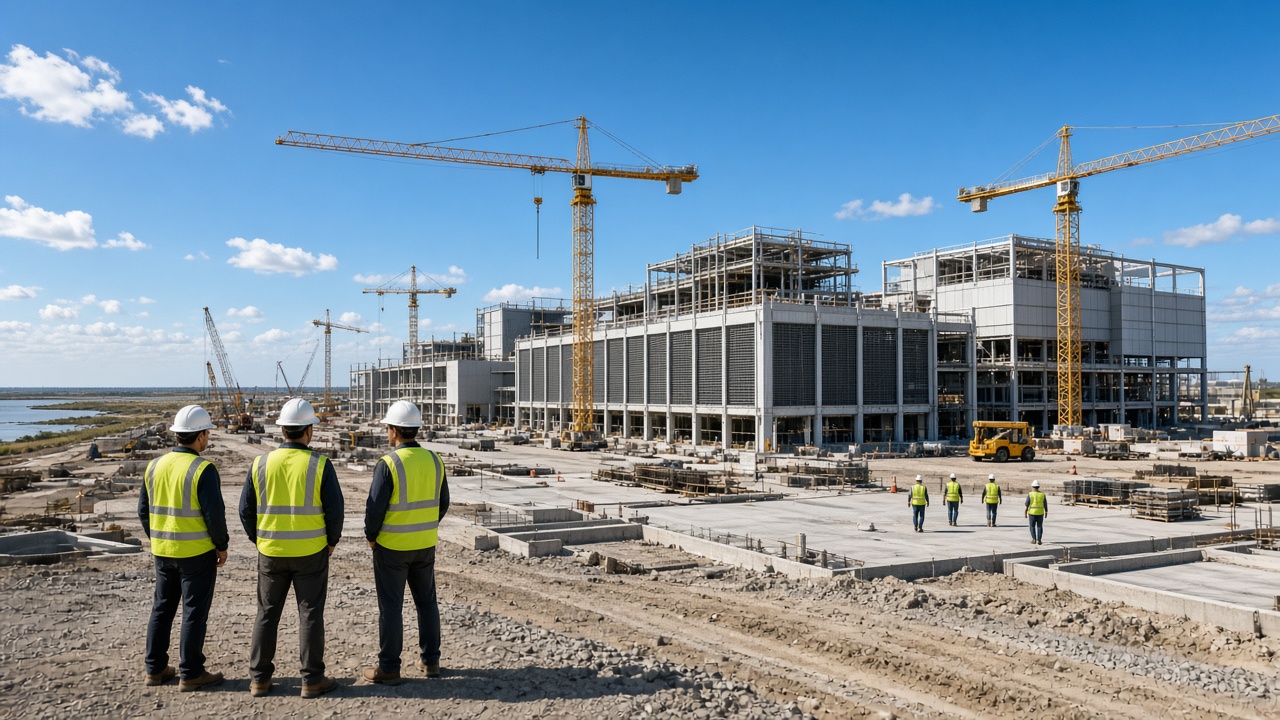
New AGC data: half of US metros added construction jobs, led by data centers, power and factories. Where the work is and what it means for property careers.
If you want to know where the construction and property jobs are in America right now, don't look at a map of where people want to live. Look at a map of where the servers are going.
That's the clear message from new numbers out this week. On Wednesday, October 28, the Associated General Contractors of America (AGC) released its analysis of the latest government employment data. Construction employment rose in 180 of 360 metro areas, exactly half, between September 2025 and September 2026. Another 118 metros lost jobs and 62 were flat.
The split isn't random. In AGC chief economist Ken Simonson's words: "More often than not, there is a correlation between where data centers or large power and manufacturing facilities are getting built and which metro areas are adding new construction jobs."
The winners and the laggards
Here's where the hiring happened over the 12 months, according to AGC:
- Houston-Pasadena-The Woodlands, Texas added the most jobs: 13,800, up 5%.
- Baton Rouge, Louisiana added 12,300 jobs, a remarkable 27% jump and the biggest percentage gain in the country.
- St. Louis and Columbus, Ohio each added 10,700 jobs (up 13% and 17% respectively).
- Smaller metros punched above their weight too: Lafayette, La. (up 15%), Shreveport-Bossier City, La. (up 14%) and Davenport-Moline-Rock Island, Iowa-Ill. (up 14%).
On the other side of the ledger, the Atlanta-Sandy Springs-Roswell metro division lost the most jobs (down 5,100, or 5%), followed by Jersey City-White Plains (down 4,500), Oakland-Fremont-Berkeley (down 4,400), Riverside-San Bernardino-Ontario (down 3,900) and Lakewood-New Brunswick, N.J. (down 3,600). Anchorage, Alaska had the steepest percentage fall at 10%.
AGC's explanation for the losses is blunt: rising material prices, tariffs and higher interest rates are causing developers to delay or cancel many projects. CEO Jeffrey Shoaf put it this way: "The only kind of projects that appear immune to uncertainties about future federal infrastructure investments and rising prices are data centers."
This fits the bigger national picture
The metro data lines up with what AGC reported earlier this month from the national numbers. Construction employment hit 8,364,000 in September, up 109,000 over the year. Nonresidential firms accounted for all of that growth, adding 142,000 jobs (up 2.9%), while residential builders and subcontractors shed 32,800 (down 1.0%).
Pay is moving in workers' favor. Average hourly earnings for production and nonsupervisory construction employees reached $39.20 in September, up 4.3% over the year and 20.2% above the private-sector average. Meanwhile, the pool of unemployed people with recent construction experience shrank 11% to 359,000. In plain English: there are fewer experienced people looking for work, and the ones who are can command more.
It's not just builders cashing in. Commercial real estate's biggest services firms are reorganizing around the same trend. When CBRE reported third-quarter results on October 22, revenue from its critical infrastructure services business, mostly data center work, jumped 80% year over year, and facilities management revenue rose 13%. CBRE expects that critical infrastructure line alone to bring in nearly $4.5 billion in 2027.
What this means if you work in property
Here's my take, and I'm genuinely optimistic about it. The AI build-out isn't just a tech story. It's one of the biggest physical real estate stories of our lifetimes, and it needs people. Lots of them. Not only electricians and HVAC techs, but:
- Project managers and construction managers who can deliver huge, complex sites on time
- Cost estimators and quantity surveyors who can keep budgets honest when materials prices are jumping around
- Facilities managers and critical environment engineers to run these buildings 24/7 once they're switched on
- Site selection, land and development specialists who understand power, water, zoning and community approvals
- Brokers, asset managers and analysts working on data center leasing, sales and financing
If you're in residential construction or development and feeling the squeeze, that's real, and I won't pretend otherwise. But many of your skills transfer. Scheduling, subcontractor management, safety, permitting and budgeting all matter just as much on a data center or power project. A move into nonresidential work could be the smartest career play you make this year.
And location matters more than ever. A willingness to relocate to Houston, the Gulf Coast or the Midwest corridor around Columbus and St. Louis could open doors that are shut in Atlanta or the Bay Area right now.
A quick look north of the border
Canada's picture is tougher on the residential side. On the same day as the AGC release, the Bank of Canada raised its policy rate by a quarter point to 2.5%, its first hike in three years, and warned the housing market is already struggling, particularly in Ontario and British Columbia. For Canadian property professionals, that points the same way: the steadier opportunities are in operating, managing and maintaining assets, and in infrastructure and energy work, rather than relying on transaction volume.
My practical advice
- Follow the power. Data centers go where electricity is available. Watch utility announcements and large-load interconnection news in your region. Jobs follow.
- Upskill for mission-critical work. Learn the basics of electrical distribution, cooling, redundancy and commissioning. Even a short course makes you more useful on these projects.
- Use AI tools to get up to speed fast. Tools like Grok Bot, Claude or ChatGPT can help you decode technical specs, summarize a project's public filings, or prep for an interview at a firm you've never worked with. Then verify the facts yourself.
- Talk to the services firms. The big property and facilities companies are hiring for data center operations, not just construction.
The jobs map is being redrawn in real time, and that's exciting if you're willing to move with it.
Find your next role
Whether you're in construction, facilities, development or brokerage, browse the latest property jobs across the US and Canada on PropertyRoles and get ahead of where the work is going.